 Hogtown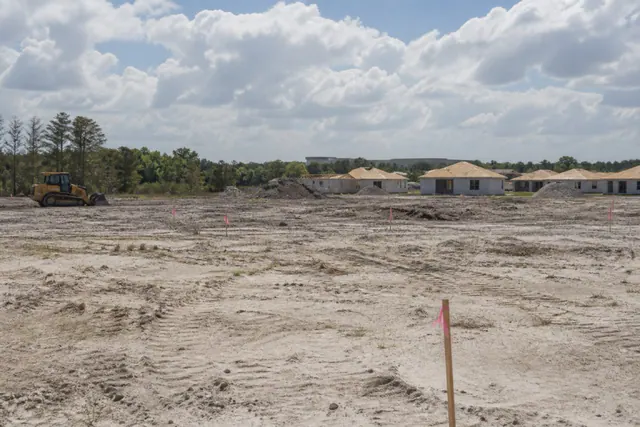
Hogtown Land Clearing puts Alachua property owners in front of a local land clearing contractor for mulching, clearing, and site prep around Alachua.
The City of Alachua counted 10,574 people in the 2020 census — up from 9,059 a decade before — and the reason is visible from the I-75 interchange: a biotech and logistics employment base anchored by Progress Park, with new rooftops following the jobs up the US-441 corridor. Clearing work here rides that same wave. Family pasture becomes a subdivision phase, a wooded five-acre split becomes two homesites, and every one of those conversions starts with machines.
The ground is classic western-county upland: deep, well-drained sand over limestone, rolling gently, grown up in live oak, laurel oak, and longleaf where it hasn't been grazed. It is honest clearing ground — machines work nearly year-round, mulch finishes look clean, and pads compact predictably. The wrinkle is the karst beneath: this stretch of the county is sinkhole country, and depressions that swallow rainwater get flagged and worked around, not filled and forgotten.
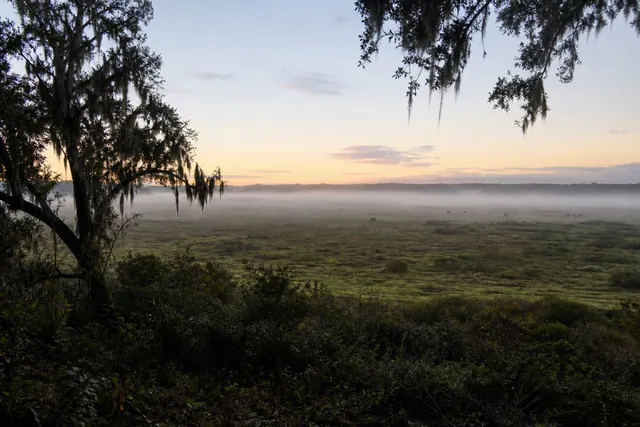
Alachua parcels also sit close to protected land — San Felasco Hammock Preserve State Park guards one of the best hardwood hammocks in Florida just south of town. Nobody is clearing in the preserve, but plenty of owners clear beside it, and the etiquette matters: keep silt out of the swales that feed it, keep equipment clean of cogongrass, and keep the big edge oaks that make these lots worth owning.
Whether it is a quarter-acre infill lot near Main Street or twenty acres of regrowth off CR-235, Hogtown Land Clearing puts an Alachua-area owner and a local contractor on the same parcel with the same list — walked, scoped, and priced in writing for free.
Clearing where the city meets the preserve
Growth-edge clearing carries two sets of expectations. The city side wants dust control, contained debris, and working hours the neighbors can live with; the preserve side wants clean stormwater and no invasive hitchhikers. Both are manageable with ordinary discipline — silt fence where the grade falls away, mulched rather than bare surfaces at job's end, and equipment that arrives clean. Alachua's development standards and parcel details live through the city and Alachua County's online tools, and the county GIS settles the jurisdiction question — parcels on this edge fall either way, and the tree rules differ.
For wooded lots near the hammock edge — moss-heavy live oaks, hickory, the occasional champion-sized specimen — a selective plan beats a blanket one. The lots selling best along this corridor are the ones that kept their canopy and cleared the tangle beneath it.
From pasture to pad on Alachua sand
Former grazing land converts fast here: no heavy timber, established access, and sandy ground that grades cleanly. The two pre-checks that keep those jobs fast are wildlife and weeds. Open sandy pasture is prime gopher tortoise ground, and burrows carry state protection under FWC rules — a pre-clearing survey is cheap insurance. Old pasture is also where cogongrass circles hide; the identification photos in UF/IFAS EDIS are worth a look before any mowing pass spreads a patch across the site.
Handled up front, neither issue slows a project meaningfully. Discovered mid-job, either one can park it.