 Hogtown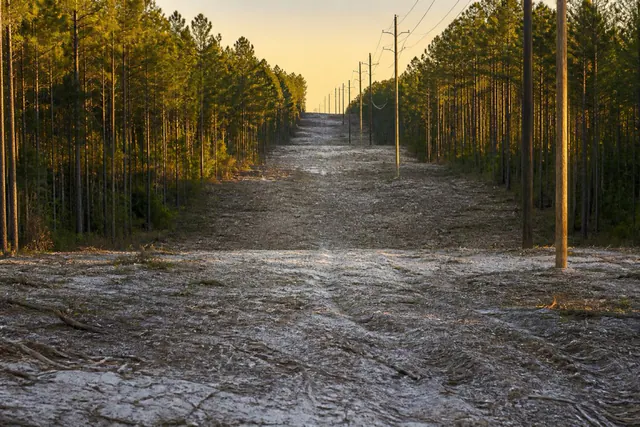
Hogtown Land Clearing puts Gainesville property owners in front of a local land clearing contractor for right-of-way clearing across Gainesville and Alachua County.
Right-of-way jobs are the geometric end of this trade: a defined corridor — power easement, pipeline, drainage ditch, survey line, private road reserve — cleared to a stated width and height spec, often for miles, often on a schedule tied to inspection cycles. Around Gainesville the demand comes from utilities and their contractors, timberland managers east of town, homeowners' associations, and owners of long, skinny deeded access strips.
Mulching heads changed this trade's economics. A tracked carrier with a drum head clears corridor at a pace hand crews cannot touch, leaves a mat instead of windrows of cut brush, and — the part clients care about — produces a corridor that looks maintained rather than logged. For wet east-county sections, low-ground-pressure carriers keep production moving over soft flatwoods soil that would swallow a wheeled machine.
Specs rule the work. A distribution power line corridor might call for fifteen feet of clearance and a danger-tree assessment along the edges; a drainage easement wants clean flowline visibility; a survey line needs only a walkable, sightable lane. Quoting well means walking or riding the corridor first, flagging the exceptions — wet crossings, fences, structures encroaching on the easement — and pricing by the mile with those exceptions listed.
Documentation is part of the deliverable on commercial corridor work: GPS tracks of the cleared line, photo points, and notes on danger trees left standing by agreement. It is the difference between telling an asset manager the corridor is clear and showing them.
Bring Hogtown Land Clearing the corridor map or even a legal description, and a local contractor will ride it, flag the exceptions, and return a per-mile, per-task written quote built for a maintenance budget.
Vegetation pressure on north Florida corridors
A cleared corridor in this climate starts closing the day the machine leaves — pine and sweetgum seedlings, wax myrtle, and vine species push several feet of regrowth in a good rain year. That is why serious corridor owners buy cycles, not clearings: a mulching pass on a two-to-four-year rotation costs a fraction per mile of a rescue clearing after ten years of neglect. Species-level regrowth behavior is well documented in UF/IFAS EDIS forestry publications, and the Florida Forest Service perspective on fuels applies directly: an overgrown easement is a fuse laid across every parcel it crosses.
Cogongrass adds a corridor-specific wrinkle — infested segments are treated as contamination zones, cleared last or with cleaned equipment, so the corridor itself doesn't become the vector that seeds every property along the line.
Corridors that cross wet ground and wildlife
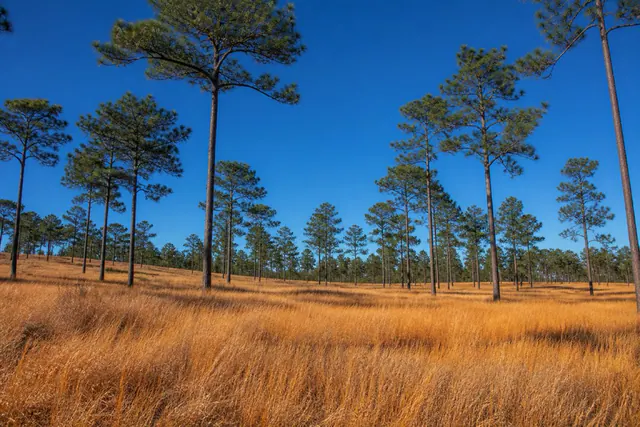
East of Gainesville, corridors inevitably cross flatwoods swales and wetland edges where the rules change mid-mile: mechanized clearing in jurisdictional wetlands has limits, timing windows matter, and low-ground-pressure equipment earns its mobilization fee. The state frame lives with Florida DEP, and protected-species overlays — gopher tortoise burrows on the sandy stretches above all — come from FWC guidance. Corridor quotes here flag those segments individually instead of averaging them into a blended rate that surprises everyone later.
Handled correctly, none of it stops the work — it sequences it. The dry sandhill miles run in any season; the wet crossings get their window and their machine.