 Hogtown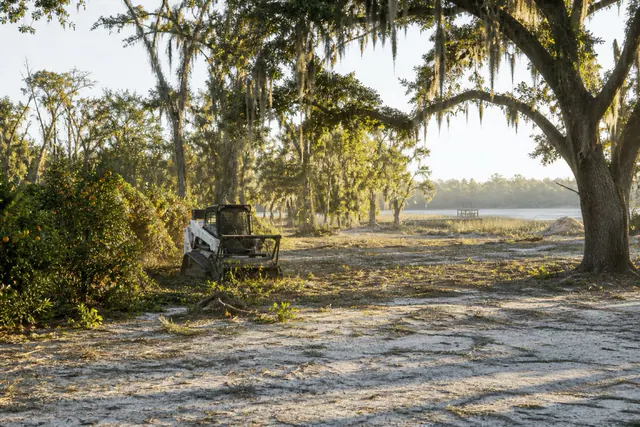
Hogtown Land Clearing puts Cross Creek property owners in front of a local land clearing contractor for mulching, clearing, and site prep around Cross Creek.
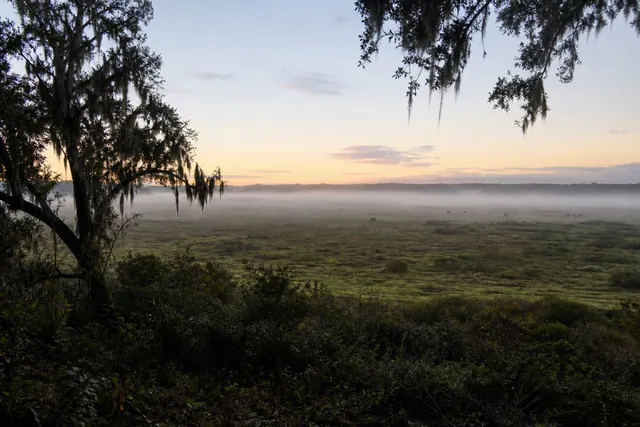
Cross Creek is the strip of old Florida between Orange and Lochloosa lakes where Marjorie Kinnan Rawlings wrote The Yearling — her farmhouse still stands as a state park among the orange trees. The community is unincorporated and small enough that the census doesn't carve it out, but its identity outweighs its size: cracker homesteads, fish camps, moss-hung oaks, and acreage that has been in families for generations.
Clearing here is inherently respectful work. The parcels carry history — remnant citrus corners, hand-built fence lines, oak canopy older than the county's roads — and the work orders reflect it: vine tangle cut out of old groves, homestead yards reclaimed from a decade of regrowth, lake-adjacent brush thinned without touching the wetland fringe, and storm cleanup when the big oaks shed.
The land splits by elevation. The hammock ridges between the lakes are workable most of the year; the low margins toward Lochloosa and Orange lake belong to the wet-prairie edge, where machines stop and the rules of the lakeshore take over. A local operator reads that boundary on the walk and prices only the ground that should be worked.
Hogtown Land Clearing connects Cross Creek owners with a contractor who understands the assignment: keep the place feeling like Cross Creek, cleared. Walked first, written down, itemized, free.
Old groves and what to save from them
The remnant citrus corners on Cross Creek homesteads are heritage worth a deliberate decision. Some trees are alive under the vines and worth rescuing — cleared, pruned, and given light, sour-rootstock survivors can fruit for another generation; others are freeze-killed skeletons holding up smilax. The clearing pass separates them: tangle ground out, live trees released and kept, dead wood dropped and chipped. Citrus care after release is classic Extension-office ground, and the broader homestead-orchard tradition here is part of why the state preserved the Rawlings farm as it did — context the Florida Museum and the park literature both tell well.
Nothing about the machine work changes for sentiment — but the flagging tape does, and that is the difference between clearing a parcel and erasing one.
Between two lakes: working the margins right
Orange and Lochloosa are working wildlife lakes — bass fishery, alligators, wading-bird rookeries — and their fluctuating margins are wetland systems under state protection coordinated by Florida DEP, with wildlife rules from FWC layered on. Upland clearing keeps a respectful vegetated distance from those margins: the buffer filters runoff, holds the bank, and keeps the job unambiguously legal. The lakes reward it — the fish camps' economy and the evening birds are the amenity Cross Creek owners actually own.
On the ridges, ordinary rules apply: sandy hammock ground, machines nearly year-round, mulch finishes that vanish into the leaf litter by spring.