 Hogtown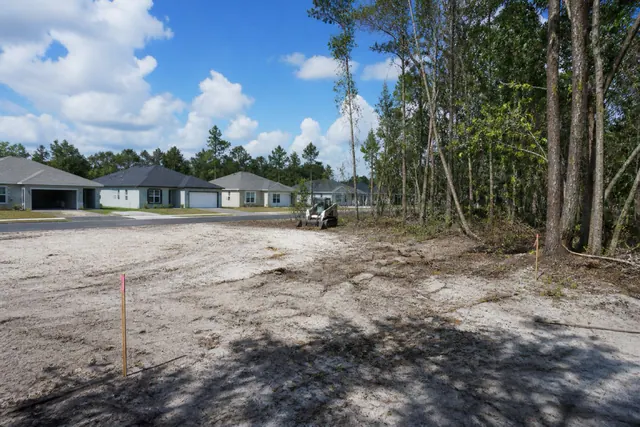

Hogtown Land Clearing puts Gainesville property owners in front of a local land clearing contractor for lot clearing across Gainesville and Alachua County.
Lot clearing is the version of this trade with a deadline attached: a surveyor has set the corners, a builder wants the pad, and the piece of scrub oak and cherry between them is suddenly on the schedule. Around Gainesville that lot is usually one of two animals — a platted parcel in the fast-growing corridor west of I-75, or an acreage homesite carved off family land out toward Newberry, Archer, or Hawthorne.
The sequence matters more than the horsepower. First the keep-trees get flagged and protected, because a mature live oak on the back corner is worth real money to the finished home. Then the clearing: brush and small stems mulched or piled, larger timber felled and bucked, stumps grubbed or ground depending on whether a slab, a septic field, or a driveway is going over them.
What is under the surface deserves respect here. Much of Alachua County sits on limestone close beneath the sand, and the county's western half drains internally — rain goes down, not sideways. That karst plumbing is why an experienced operator watches for soft spots and old solution features while grubbing, and why the site's low corner should be planned for water before the pad grade is set, not after.
Clearing for construction also touches rules a lawn project never meets: tree protection under city or county land-development codes, erosion control before dirt moves, and stormwater rules once the disturbed footprint gets large enough. None of it is exotic, but all of it is easier when the contractor has stood in front of these counters before.
Bring Hogtown Land Clearing the survey or even just the parcel number, and a local contractor will walk the lines, talk through what stays and what goes, and put every task — clearing, grubbing, hauling, rough grade — on one itemized sheet with a price beside it.
Clearing over karst: what the limestone changes
Gainesville's landscape is classic Florida karst — soluble limestone under a sand blanket, with sinkholes, swallets, and disappearing streams as the signature landforms. The U.S. Geological Survey maintains plain-language material on how these features form and why they cluster where the limestone runs shallow. For a clearing job, the practical translation is simple: pay attention to circular depressions, soft grubbing, and any spot that swallows water suspiciously fast, and route roof and driveway runoff away from them.
It is also why 'just push it all into the low spot' is bad advice in this county. That low spot may be doing hydrologic work. A contractor who grades here regularly leaves natural drainage features functioning and builds the pad up rather than filling the landscape's plumbing.
The paper side of a buildable lot
Depending on where the lot sits, tree removal and land alteration may involve the City of Gainesville's land development code or the county's — Alachua County's site is the starting point for unincorporated parcels, and the county's GIS tools will tell you which jurisdiction you are actually in, which surprises people on the urban edge. Regulated and heritage trees carry real protection, and finding out at inspection time is the expensive way to learn.
Larger disturbed areas can also trigger an environmental resource permit handled through the Suwannee River Water Management District, which covers most of the county. Single homesites usually stay under those thresholds, but the quote walk-through is the right moment to confirm rather than assume.