 Hogtown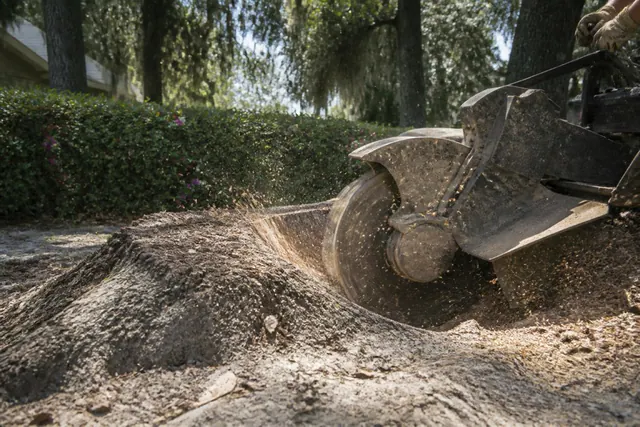
Hogtown Land Clearing puts Gainesville property owners in front of a local land clearing contractor for stump grinding across Gainesville and Alachua County.
Gainesville grew up under oaks, and the oaks are aging out. Laurel and water oaks — fast growers the neighborhoods were planted with decades ago — decline hard in their sixties and seventies, which is why so many yards in town hold a fresh stump and a circle of sawdust where a shade tree stood in the spring. The tree service leaves; the stump stays. Grinding is how it actually goes away.
The tool is a spinning wheel of carbide teeth, carried on a self-propelled frame, that sweeps across the stump, shaving it into chips from the top down. Standard practice takes the stump six to twelve inches below grade — deeper on request where a fence post, mailbox, or replanting is going in the same spot. In Gainesville's sand the grinding itself runs fast; what varies is the size of the root flare and how much rock-free depth you want.
Surface roots matter as much as the stump here. Laurel oaks throw wide, shallow root systems that hump up sidewalks and make a mower's life miserable long after the trunk is down. A grinding visit can chase those runners across the yard, which is often the difference between a patched hole and a lawn that mows flat again.
One honest caution: grindings are not fill. The chip-and-soil mix left in the hole settles as it rots, so a stump backfilled with its own grindings becomes a dip within a couple of summers. The right finish is grindings out or spread thin, clean sandy fill in, lightly compacted — a five-minute conversation on the quote that saves a return visit.
Send Hogtown Land Clearing a photo and rough diameter of what you have — one stump or a cleared acre's worth — and a local operator will price the grinding, the depth, and the cleanup in writing, free.
Why Gainesville's laurel oaks keep the grinders busy
Laurel oak is the classic short-straw tree of North Florida yards: it shoots up fast, looks like a live oak to the untrained eye, and starts hollowing and shedding limbs at an age when a live oak is just getting started. University of Florida IFAS species pages in the EDIS library lay out the lifespan difference bluntly. When one comes down, grinding the stump promptly also removes the decaying wood that root-rot fungi and termites would otherwise colonize a few feet from the house.
If you are replanting after removal, the Alachua County Extension office is a genuinely useful stop — matching the replacement species to the spot is how the next owner avoids repeating this cycle in 2075.
Grinding versus pulling on sandy ground
Yanking a stump out with an excavator works, but it leaves a crater, tears up everything the roots ran under, and needs heavy iron on-site. Grinding removes the same obstacle from above with a machine that rolls through a 36-inch gate and leaves the lawn around it intact — the right call in established yards, around irrigation lines, and near the shallow utilities that thread through older Gainesville neighborhoods. Excavation earns its place on construction sites where a pad is going over the spot and the hole will be compacted in lifts anyway.
Weather is rarely the constraint: on this county's droughty sand, a grinder can usually work the morning after a storm that would bog a wheeled machine elsewhere in Florida — one more reason, per NWS Jacksonville climate patterns, that summer scheduling here is easier than the thunderstorm count suggests.