 Hogtown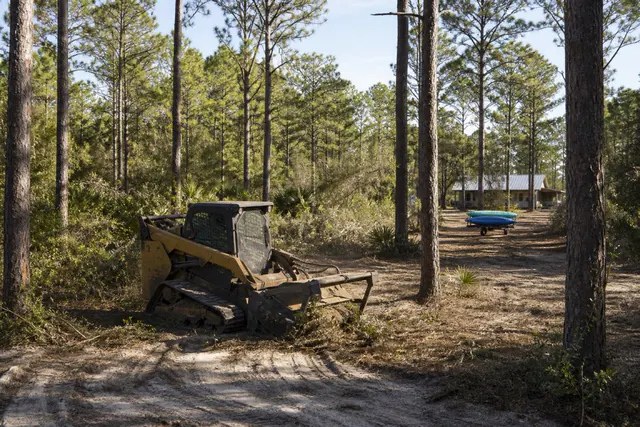
Hogtown Land Clearing puts High Springs property owners in front of a local land clearing contractor for mulching, clearing, and site prep around High Springs.
High Springs — 6,215 people at the 2020 census — is the county's outdoor-recreation capital, the town where US-27 traffic slows for kayak trailers. The Santa Fe River wraps its north side, the springs draw the summer crowds, and the acreage around town draws people who want pines, sand roads, and a short drive to the water. Clearing here is how those parcels become livable without losing what made them worth buying.
The work itself skews rural-residential: underbrush thinned out of longleaf and laurel oak stands, homesites opened on wooded five-and-ten-acre parcels, driveways cut back to county roads, and storm cleanup after summer cells roll down the river corridor. The ground is forgiving — deep, fast-draining sand that carries tracked machines almost any week of the year.
What makes High Springs different is what is underneath. This is as karst-transparent as Florida gets: the sand sits directly on cavernous limestone, and rainfall here recharges the same aquifer that feeds the springs people swim in. Clearing responsibly in this zone means mulch-first methods, no mystery fill, no burying debris, and honest respect for sinkholes and depressions as working parts of the plumbing.
Hogtown Land Clearing connects High Springs owners with a local contractor who treats springs-country ground accordingly — and still delivers an ordinary, itemized, free quote with a real schedule on it.
Working over a see-through aquifer
The Santa Fe basin's springs and swallets make the groundwater connection unusually direct here — what soaks into a High Springs parcel is drinking water and spring flow on a short delay. The Suwannee River Water Management District manages the basin and oversees larger land-alteration projects in it; for homesite-scale work the practical rules are habits: grind vegetation instead of burning or burying it, keep fuels and lubricants managed on site, and leave vegetated buffers along any wet feature. The karst science behind those habits is laid out well in USGS materials on Florida's springs region.
None of this makes clearing harder — mulching is already the default method. It just makes the cheap, clean way and the right way the same way.
Keeping the pines, losing the tangle
The signature High Springs parcel is pine over sand with an understory that has gotten away — laurel oak volunteers, briar, and grapevine filling the middle story until the lot reads as woods instead of pineland. Selective mulching resets it: the machine grinds the understory and leaves the longleaf and the best oaks standing in open, parklike ground. Species-by-species keep-or-grind advice is the Extension office's daily bread, and the fuels logic — thinned understory as wildfire protection — matches Florida Forest Service guidance for rural homes.
Owners here consistently make the same discovery: the parcel they wanted was under the parcel they had, one machine-day down.