 Hogtown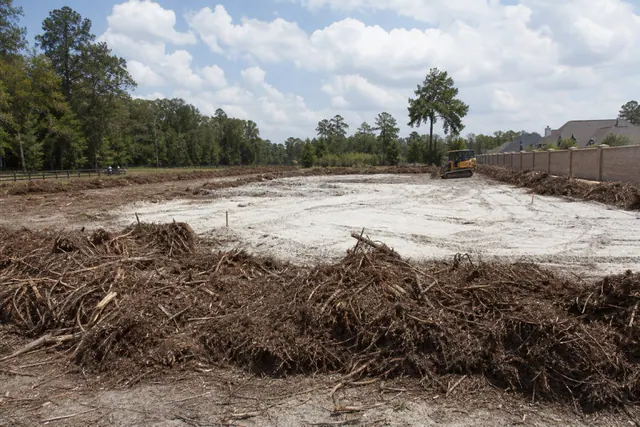
Hogtown Land Clearing puts Jonesville property owners in front of a local land clearing contractor for mulching, clearing, and site prep around Jonesville.
Jonesville is the unincorporated seam where Gainesville's westward growth meets the county's horse country — the Newberry Road corridor between the city and Newberry proper, where gated subdivisions, estate lots, and long-established equestrian farms share fence lines. No census boundary captures it, but everyone in the county knows exactly where it is: it is where the new houses are.
The clearing work is correspondingly two-sided. Development-side jobs are precise and schedule-driven — estate lots cleared selectively to keep their oak character, subdivision out-parcels taken to pad, buffers shaped between new walls and old pasture. Farm-side jobs are the traditional menu: fence lines, pasture resets, arena and paddock ground prepped and drained.
What both sides pay for here is finish quality. Jonesville parcels are visible, valuable, and next door to someone who paid for their view. Grind-in-place methods keep the work contained — no burn piles smoking over a subdivision, no debris convoys through neighborhood streets — and mulched surfaces read as intentional from day one.
The ground is western-upland standard: deep sand, rolling gently, oak and pine cover, workable nearly year-round. Gopher tortoise checks apply on the open sandy stretches, and the corridor's older fence lines carry the usual buried-iron history.
Hogtown Land Clearing connects Jonesville owners — builders and horse people alike — with a contractor who works this corridor weekly and prices its standards honestly: walked, itemized, free.
Estate-lot clearing: keeping the trees that sold the lot
The Jonesville estate-lot brief is nearly always the same sentence: 'clear it, but keep it looking like this.' Execution means a real tree plan — keepers flagged and fenced at the dripline, understory mulched to open the ground plane, and grading kept clear of root zones so the oaks that justified the price survive the construction that follows. Root-zone and species guidance runs through UF/IFAS EDIS, and county tree provisions for unincorporated parcels through Alachua County put regulatory weight behind the good practice.
Builders get a bonus from the same discipline: protected trees documented before clearing means no mitigation surprises at permitting time.
Horse-country ground work along the corridor
The equestrian side of Jonesville buys a specific kind of dirt work: paddocks reclaimed from fennel and myrtle, arena pads built level and draining, travel lanes that stay firm in summer, and fence corridors clean enough to inspect wire at a walk. The agronomy behind good horse ground — soil tests, bahia and bermuda management on sand — is Extension-office territory, and the wildlife check matters here too: open sandy pasture is tortoise habitat, and burrows near a planned arena get handled under FWC rules before machines grade anything.
Farm etiquette rides along as standard: stock rotated away from work, gates coordinated, cherry cuttings gone the same day.