 Hogtown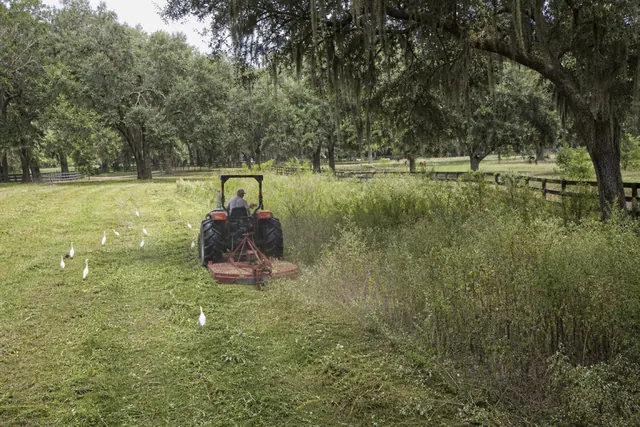
Hogtown Land Clearing puts Gainesville property owners in front of a local land clearing contractor for pasture & acreage reclamation across Gainesville and Alachua County.
Every horse-country road out of Gainesville — toward Micanopy, Archer, Jonesville, LaCrosse — passes a pasture in some stage of surrender: dog fennel first, then wax myrtle islands, then a stealth forest of sweetgum and laurel oak that shades out the last of the bahia. Reclamation reverses that timeline mechanically, and the earlier it starts, the cheaper it runs.
The playbook scales with how far gone the field is. Fennel-and-broomsedge stages need little more than aggressive bush-hogging and a fertility reset. Myrtle-and-sapling stages want a mulcher head grinding woody clumps flush. Full regrowth — trunks past fist-thick — becomes selective clearing, with keeper oaks preserved for shade and everything else ground or grubbed depending on whether the field will be hayed or just grazed.
What happens after the machine decides whether you reclaimed a pasture or just mowed a future thicket. Grinding leaves the ground covered in chips that rot into sandy soil that needs the organic matter; then comes the agronomy — soil test, lime if the numbers call for it, fertility, and either coaxing surviving bahia back into a stand or drilling new seed. Skipping that step invites the fennel straight back.
Horse and cattle owners here also inherit the region's specific hazards: cogongrass circles that must not be spread by equipment, cherry trees whose wilted leaves are toxic to livestock and belong out of any grazed field, and gopher tortoise burrows in sandy corners that machines must respect. A local operator prices around all three as a matter of routine.
Walk the field once with the contractor Hogtown Land Clearing connects you with, and the whole path back to grass — knockdown, grinding, and the after-plan — lands on one free, itemized quote.
From chips to grass: the agronomy half
Reclaimed ground responds to soil chemistry as much as horsepower. A soil test through the Alachua County Extension office costs less than a fence post and tells you the pH and phosphorus story before you spend on seed; bahiagrass tolerates our acid sands but still pays back lime when the test says so. The forage chapters of UF/IFAS EDIS cover establishment timing — bahia goes in with the early-summer rains, and a fall reclamation can sit clean over winter for a June seeding.
Grazing management then does the maintenance for free: a healthy, properly stocked bahia sod is the best fennel suppression on the market, while an overgrazed one is an open invitation.
What to keep standing in a working field
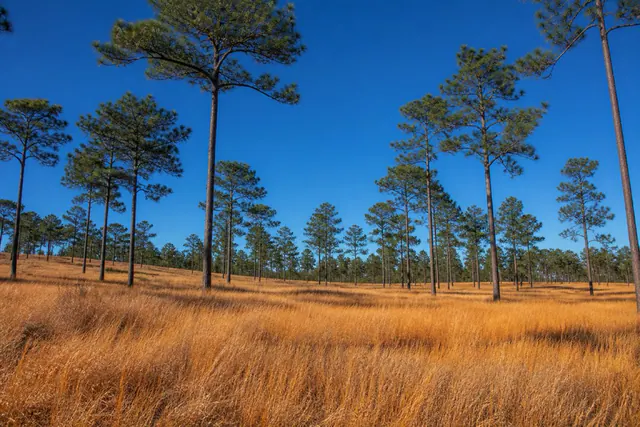
The best north Florida pastures aren't treeless — they keep their live oaks. A handful of mature spreading oaks gives livestock shade that measurably matters in an August that NWS Jacksonville data will confirm runs weeks of mid-90s heat index, and a savanna-style field with clean grass under scattered canopy is also worth more at sale. The species to cull are the fast, brittle, or toxic ones: laurel oak, sweetgum thickets, chinaberry, and black cherry anywhere a horse can reach.
Field edges deserve one decision too: a maintained mow line where the pasture meets the woodlot, or the treeline creeps back a few feet every year until the field forgets its shape.