 Hogtown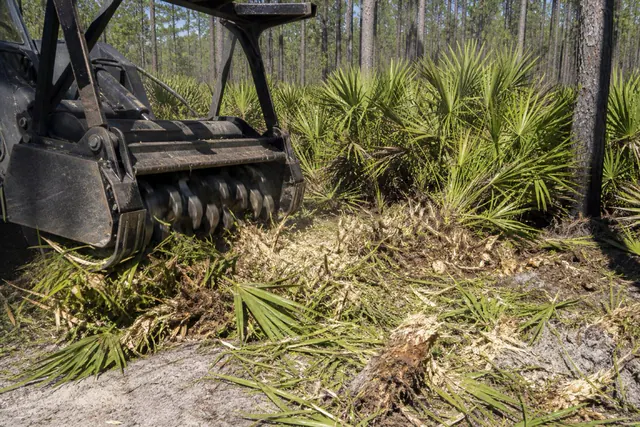
Hogtown Land Clearing puts Gainesville property owners in front of a local land clearing contractor for palmetto removal across Gainesville and Alachua County.
Saw palmetto is the east side of Alachua County's signature clearing problem. Out toward Hawthorne, Melrose, and the lake country, flatwoods lots carry an understory of fanned palmetto so dense a dog disappears in it — beautiful at the preserve, miserable around a homesite, and nearly fireproof to ignore: palmetto is oily, flammable, and regrows from trunks that survive almost anything.
The reason palmetto defeats casual clearing is anatomy. The visible fans sprout from a horizontal trunk — a woody rhizome snaking along or just under the surface, sometimes decades old and thick as a thigh. Mow the fans and the trunk simply refans by fall. Real removal engages the trunk: a mulcher grinding into the crown mat for control-and-manage goals, or grubbing the trunks out entirely where the ground must become lawn, pasture, or pad.
Those two finishes define the price conversation. Grind-in-place is fast and keeps the soil intact — fans return thinner over a few seasons and an occasional pass holds the line; it suits buffers and rough acreage. Grub-and-rake is slower, dirtier work that pulls the trunk mat out of the sand — and it is the only honest path to ground you intend to plant and mow.
Flatwoods ground adds its own scheduling truth: much of the palmetto country east of Gainesville sits on soils with a shallow hardpan that perches the rainy season's water. The same lot that bogs a machine in September grinds clean in November. A local operator reads that calendar and quotes the window along with the work.
Tell Hogtown Land Clearing how much palmetto you have and what the ground needs to become, and a local contractor will walk it, sort the grind-versus-grub zones with you, and price each on one free written quote.
Respect the plant, clear the parcel
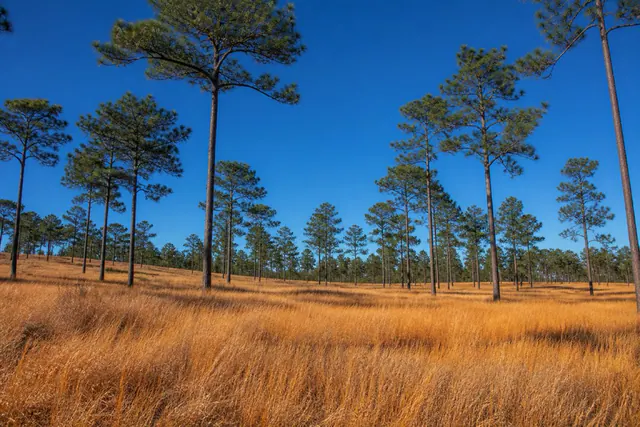
Saw palmetto deserves the respect of accuracy: it is one of the oldest living plant communities in Florida — individual clonal patches are estimated at centuries old — it feeds everything from bears to pollinators, and its berries support a genuine wild harvest economy, which is why Florida regulates berry collection on lands you don't own through FDACS permitting. None of that obligates you to live inside a thicket. The working compromise on rural east-county land is zoning the parcel: full removal where people, structures, and grass belong, managed palmetto kept where it is doing habitat work at a comfortable distance.
Natural-history background on the flatwoods community is worth ten minutes — the Florida Museum of Natural History, based right in Gainesville, covers these ecosystems well.
Fire, snakes, and the practical case for clearance
The defensible-space argument writes itself in palmetto country. Palmetto fronds carry volatile oils that burn hot and fast; the state's wildfire guidance from the Florida Forest Service treats heavy palmetto within thirty feet of a structure as exactly the fuel to remove first. Clearing the thicket back from the house is the highest-value acre of the whole job.
There is also the everyday livability point owners mention afterward: cleared edges mean visible ground, and visible ground means fewer surprise encounters — with diamondbacks that hunt palmetto cover, and with the ticks and chiggers that make un-cleared flatwoods yards unusable half the year. Guidance on living alongside wildlife instead of on top of it comes straight from FWC.